What is 3D printing?
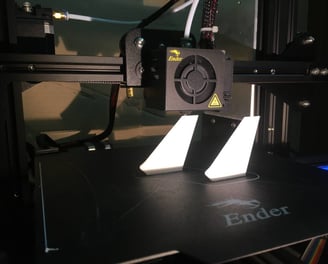
3D printing is technically known as Additive Manufacturing (AM). Let’s go deeper into the term AM. You can understand how a fountain pen works. While you write on paper, ink flows from the ink tank or cartridge through the pen nib onto the paper. Assume you have a tear-proof paper, what would happen if you keep writing again and again on the same letter after the letter dries out each time you write? You would get a 3D shape more like a blob of ink on the paper in the form of the letter. Thereby converting a two dimensional letter on a paper into a three dimensional letter. An easier visualization is the wall construction in houses, you put a layer of bricks then on top of that again one more layer of bricks, yet again one more layer etc. These many number of layers together form a wall of the house. It’s exactly same in additive manufacturing, you form a 3D object by putting material layer by layer.
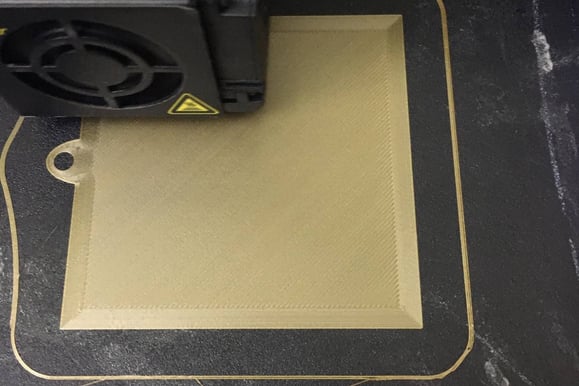
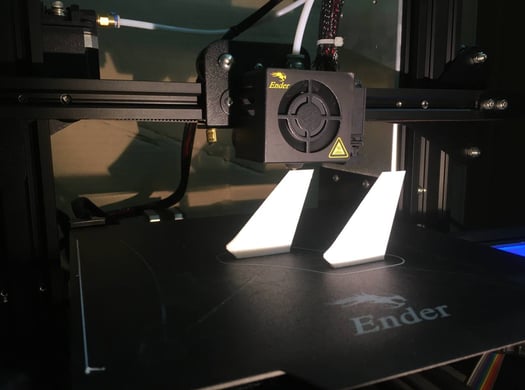
There are different methods of adding the layers. In one method, layers of material are added onto a base similar to a house wall construction. In another method, a liquid in a container will be solidified layer by layer using a laser kind of similar to Dosa making on a pan. If the Dosa is thick then it takes more time to harden because there are more number of layers to harden now. Alternatively instead of a liquid you can also use powders of material and harden it layer by layer. Some typical use cases can be plastic parts for household uses, toys, some functional metal parts. People have made rockets using this technology. We at Additive Prints currently use the first method like wall construction using bricks. It’s called Fused Deposition Modelling because the material is melted and deposited on the bed layer by layer, then the material fuses and sticks to each layer, thereby producing a 3D model. Don’t worry about the name though.
Different type of materials with a variety of colours can be used for 3D printing. Most are polymer plastics. Some flexible materials and metals can also be used. Each material has a set of properties which makes them suitable for a certain method of 3D printing. Some materials are easier to print than others because of such properties. The materials used are called filaments.
Benefits
Complex shapes which cannot be manufactured or not economical to manufacture traditionally can be manufactured using this technology.
Creative designs can be manufactured as manufacturability is limited only by imagination.
Many testing or prototype parts can be made economically compared to other alternatives.
By using creative design geometry, one can potentially use lesser material for some designs by optimizing the geometry and therefore cost effective.
Limitations
It is a slow process. The slower a part is made, the better its quality, ideally.
It is not best suited for mass manufacturing as the time taken is proportional to the quantity of parts. Unlike some traditional processes like injection moulding.
Strength may not upto the required level for certain applications.
Terminologies
Nozzle and nozzle temperature: The filament/material is heated in a tube and comes out of an end of the tube, like a pen ink coming out of the pen. This tube is called the nozzle. The temperature at which the tube is melting the plastic is called the nozzle temperature or printing temperature. How well the plastic is melted in the nozzle can change how well its pushed out for the print and hence the print quality.
Bed temperature: The base on which the printing is made is called the build plate or bed. The temperature of this plate is called the bed temperature. This affects the sticking capacity a.k.a. adhesion of the print to the bed.
Warping: In case the print is not sticking to the bed, one side or or on point of the print tends to come off the bed and stay bent, similar to the round edge of a Dosa coming off from the tawa before its fully done. This phenomenon is called warping. The bed temperature and other environmental conditions has to be kept appropriate for the material to avoid warping. Warping decreases print quality and many times print will fail if warping is high.